Step by-Step: What to Do Right Now
- Kill power to the affected area. If water is near outlets, the panel, or extension cords, flip the breaker before you step in.
- Photograph everything. Wide shots, close ups of the crack, water lines on walls, soaked boxes. Insurance adjusters want timestamps.
- Move belongings up and out. Cardboard wicks water fast. Get items at least six inches off the slab or into a dry room.
- Soak up standing water. Wet vac, towels, or a mop. Do not use a household vacuum.
- Find the source above grade. Check downspouts, grading, window wells, and hose bibs before assuming the crack itself is the only issue.
- Call a restoration crew if drywall, insulation, or flooring got wet. Surface water you can handle. Saturated materials need meters and air movers.
Signs the Crack Is Actively Leaking
- Dark staining that radiates outward from a visible fissure
- White, chalky efflorescence buildup along the crack line
- Damp carpet pad in a finished basement with no other water source
- A musty smell that worsens after rainfall
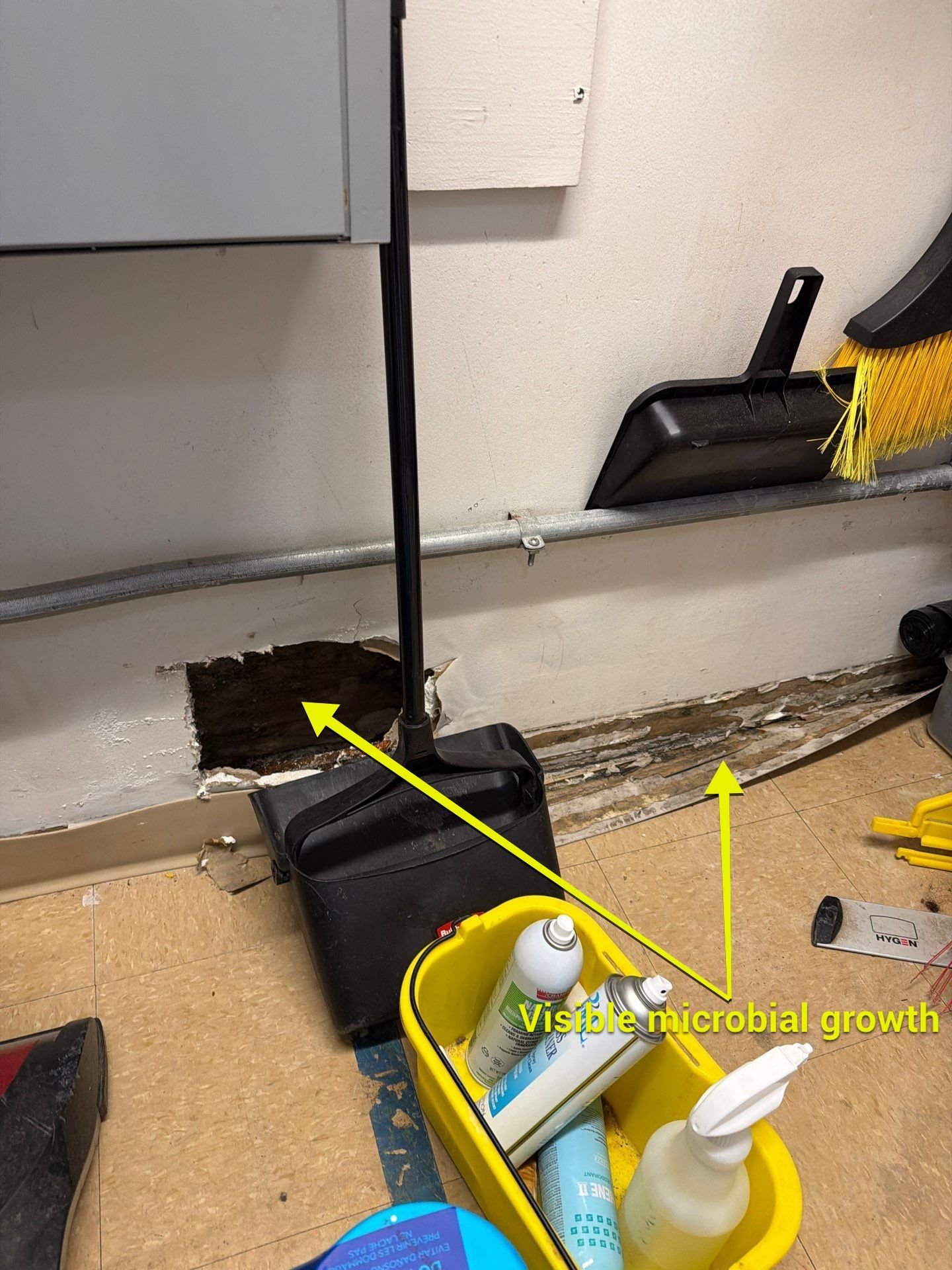
- Paint blistering or drywall sagging near the floor wall joint
- Rust streaks from rebar showing through the concrete
- Cobwebs or dust pulling downward into the crack line (an air leak that often means a water path too)
- Cool spots on the wall detected by hand or thermal camera after a storm
Catching two or more of these together usually means the intrusion has been happening for weeks. Our hidden water damage early detection guide walks through the subtler tells if you are not sure.
Materials That Usually Have to Go
- Carpet pad (almost always, even after Category 1 exposure beyond 24 hours)
- Fiberglass batt insulation behind wet drywall
- Particleboard or MDF baseboards and trim
- Lower 12 to 24 inches of drywall via flood cuts
- Cardboard boxes and paper faced items in direct contact with water
- Laminate flooring once the core swells, even if the surface looks intact
- Upholstered furniture skirts or bottoms that wicked water from the slab
How to Prevent the Next Intrusion
- Extend downspouts at least four to six feet away from the foundation
- Regrade soil so it drops one inch per foot for the first ten feet out from the wall
- Clean gutters twice a year, more often if you have heavy tree cover
- Test your sump pump every quarter and add a battery backup before storm season
- Seal hairline cracks with polyurethane injection before they widen
- Install window well covers on any well that catches standing water
- Watch for new cracks in the slab or drywall above doorways, which can signal foundation movement
Common Causes We See in Seelyville Basements
- Hydrostatic pressure from saturated soil after multi day rain events
- Poor exterior grading sloping toward the foundation instead of away
- Clogged or disconnected downspouts dumping water within three feet of the wall
- Failed window well drains backing up during storms
- Settlement cracks from clay soil expanding and contracting seasonally
- Cold joints where the original pour was interrupted decades ago
- Sump pump failure letting groundwater rise and force its way through
- Frozen discharge lines in winter that force sump water back into the pit and out through wall cracks
- Tree root pressure against older block foundations, opening mortar joints over time
Why Seelyville Homeowners Call Seelyville Water Restoration
- Local crews that know which neighborhoods sit on clay and which sit on sandy fill
- Direct billing with most major carriers and detailed scope sheets for adjusters
- Arrival in most cases within 2 hours, day or night
- A vetted network of foundation specialists for the repair handoff
- Documented dry standards before reconstruction begins, not eyeballed guesses
A wet foundation crack is rarely an emergency in the first hour, but it becomes one by day three. The faster you extract water, isolate wet materials, and run dehumidification, the smaller the rebuild gets. If you are staring at a damp wall right now, take the photos, kill the power if needed, and call us. We will walk you through the next steps on the phone before the truck even arrives.
Decision Points Before You Call Anyone
- How long has the water been there? Under 24 hours is a very different job than five days in.
- Is the basement finished or storage only? Finished space drives both cost and urgency.
- Did the water come from a clean source? Foundation seepage is typically clean but can pick up contaminants in the soil.
- Is this a recurring crack? If yes, exterior waterproofing matters more than interior drying.
- Are you filing insurance? Most policies exclude gradual seepage but cover sudden events.
- Is anyone in the home immunocompromised? That changes the threshold for containment and antimicrobial work.
When Insurance Helps and When It Does Not
- Covered: sudden storm driven intrusion, sump pump failure with an endorsement
- Sometimes covered: backup of groundwater with the right rider
- Rarely covered: long term seepage, poor maintenance, grading problems
- Never covered: the foundation crack repair itself in most standard policies
Document the date the intrusion started and the weather that day. Reach out to your carrier before demo begins so the adjuster sees the loss intact. Keep a running log of every contractor who walks the property, every receipt for fans or supplies you bought, and every hotel night if the home becomes unlivable.
Materials We Can Usually Save
- Solid wood framing if dried within 72 hours
- Concrete slab and block walls after extraction and dehumidification
- Engineered shelving and plastic storage bins
- Carpet itself, if the water was clean and pad is replaced quickly
- HVAC ductwork in most clean water scenarios
- Solid hardwood furniture lifted off the floor quickly and dried slowly
- Books and documents if frozen within 48 hours and freeze dried later
What Professional Mitigation Actually Includes
When our Seelyville Water Restoration crew arrives, in most cases within 2 hours of your call, the work follows a predictable sequence.
- Moisture mapping with infrared and pin meters to find every wet pocket
- Extraction of standing water using truck mounted or portable units
- Controlled demolition of unsalvageable drywall, baseboards, and insulation
- Antimicrobial application on Category 2 or 3 water exposure
- Placement of air movers and commercial dehumidifiers, typically one mover per 10 to 16 linear feet of wet wall
- Daily monitoring with documented moisture readings until structural materials hit dry standard
- Coordination with a foundation specialist for the crack repair itself
We do not do structural foundation repair. We dry the structure, document the loss, and hand off the crack injection or exterior excavation to a vetted partner. If you want more on the drying phase, our dry out timeline breakdown explains what each day looks like.