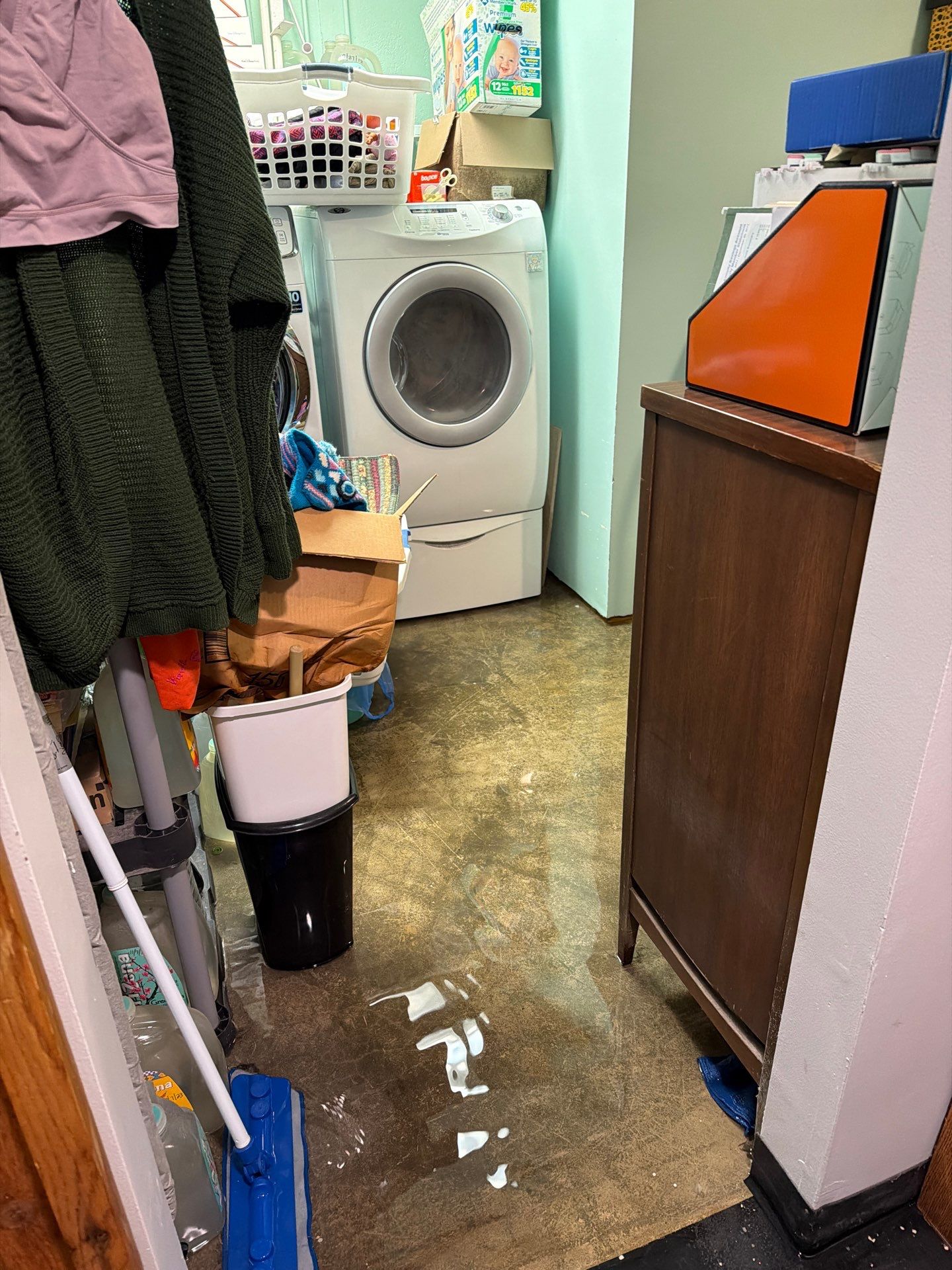
Problem: The Water On Your Floor Is Not Just Water
When a main line backs up or a lift station fails, what comes through your floor drain is raw sewage. It contains E. coli, hepatitis, rotavirus, and other pathogens that the IICRC formally classifies as grossly contaminated. You cannot mop it up with towels from the linen closet. You cannot run a shop vac and call it done. Touching it without protection puts you at real risk, especially if you have cuts on your hands or compromised immunity. Children and pets should be moved to another level of the home immediately.
Beyond the immediate health hazard, sewage water carries fine particulate that settles into grout lines, concrete pores, and HVAC return vents within hours. The contamination footprint is almost always larger than the visible water line, which is why a quick visual cleanup leaves the underlying problem in place.
Solution: Containment and Certified Extraction
A proper sewage response in Seelyville starts before the first drop is touched. Our Seelyville Water Restoration crew arrives in full PPE, including respirators, nitrile gloves, and Tyvek suits. We seal off the affected area with plastic barriers to keep contamination from spreading into clean parts of your home through air currents or foot traffic. Then we use truck-mounted extractors rated for solids and biohazard waste, not standard water pumps. Everything we remove goes into sealed containment for proper disposal under EPA guidelines.
We also shut down the HVAC system serving the affected zone before any work begins. Running a furnace or central air during active contamination pulls bacteria into the ductwork, where it can settle on coils and remain viable for weeks. Negative air machines with HEPA filtration are staged at the containment boundary to keep airborne particulate contained to the work area.
Problem: The Root Cause Will Backup Again If Untreated
Cleanup without diagnosis is a temporary fix. In Central Indiana, the most common causes of sewage backup are tree roots in clay lateral lines, municipal main overloads during heavy storms, failed sump or ejector pumps, and aging cast iron stacks that have collapsed internally. If you do not address the cause, the next backup is a matter of when, not if.
Problem: Bacteria and Odor Stay Long After the Water Is Gone
Even after extraction and demolition, the studs, subfloor, concrete, and joists in the affected area are still contaminated. Sewage odor that lingers two weeks later is not bad air. It is active bacterial colonies still off-gassing. You cannot deodorize this with a candle or a plug-in. You also cannot ignore it, because the same bacteria that smells will eventually become airborne mold and pathogen exposure your HVAC system will distribute through the entire home.
Solution: Strategic Demolition and Documentation
We perform what is called controlled demolition. Drywall gets cut at a measured height above the waterline, usually 12 to 24 inches, depending on wicking patterns we identify with moisture meters. Carpet and pad are bagged and hauled. Cabinets with sewage exposure on the toe-kick are evaluated individually. Every removal is photographed with timestamps for your insurance carrier. If you are filing a claim, this documentation is what separates a fully paid loss from a denied one. Our team also handles the related water damage restoration work, so the same crew sees the job from contamination to rebuild.
We also itemize materials by room and provide a written scope of loss that mirrors the format adjusters expect. If you are not sure where to begin with your carrier, we can walk you through the first call and what to ask for, including coverage for code upgrades and temporary lodging while the home is unsafe to occupy.
Solution: Antimicrobial Treatment and Verified Drying
Once the demo is complete, we apply EPA-registered antimicrobial agents specifically labeled for Category 3 sewage remediation. These are not store-bought disinfectants. They penetrate porous structural materials and kill the bacterial load at the source. We follow with air movers and commercial dehumidifiers, monitoring moisture content daily with calibrated meters until structural materials read at or below pre-loss equilibrium, typically 12 to 16 percent for framing lumber. Most Seelyville sewage jobs reach safe dry standard in 3 to 5 days, depending on saturation depth.
For stubborn residual odor, we deploy hydroxyl generators or thermal fogging in occupied-safe formulations. Unlike ozone, these methods neutralize odor molecules without damaging rubber, leather, or electronics left in the home. A post-remediation verification can be arranged with a third-party hygienist if you want documented clearance before reconstruction begins.
Solution: Identify, Repair, and Prevent
We coordinate with licensed Seelyville plumbers to scope the line and identify exactly what failed. From there, you have real options. Here are the three most common preventive paths our customers take after a backup:
- Install or replace a backwater valve on the main sewer line, which physically blocks return flow during a municipal surge.
- Replace a failing ejector or sump pump and add a battery backup, which handles power loss during the same storms that cause backups.
- Hydro-jet and reline the lateral, which is significantly cheaper than full excavation and lasts 40 to 50 years.
If your sewage event came from a basement floor drain during a storm, the issue may overlap with broader basement flooding patterns we see across Seelyville neighborhoods every spring. Commercial properties facing similar contamination should review our commercial sewage cleanup process, which adds occupancy and code requirements a homeowner does not face.
Problem: Porous Materials Cannot Be Saved
This is the part homeowners struggle with most. That finished basement carpet, the pad underneath, the drywall that wicked sewage up four inches, the wood baseboards, the insulation behind the wall, the upholstered furniture that sat in it: all of it must come out. The IICRC S500 standard is clear that Category 3 water saturates porous materials to a level that cannot be reliably sanitized. Trying to keep it costs you more later when mold and lingering bacteria become a second emergency.