Why Refrigerator Leaks Hide So Well
The icemaker supply line is usually a quarter-inch plastic or braided stainless tube connecting a saddle valve or shutoff under the sink to the back of the refrigerator. Two failure points dominate our Seelyville call logs. The first is the compression fitting at the rear of the appliance, which loosens over time as the fridge vibrates. The second is the plastic line itself, which becomes brittle after about 5 to 8 years and can crack near a bend. Both failures release water slowly, often less than a cup per hour, which is exactly the volume that hardwood, plywood subfloor, and cabinet kicks can absorb without showing surface signs.
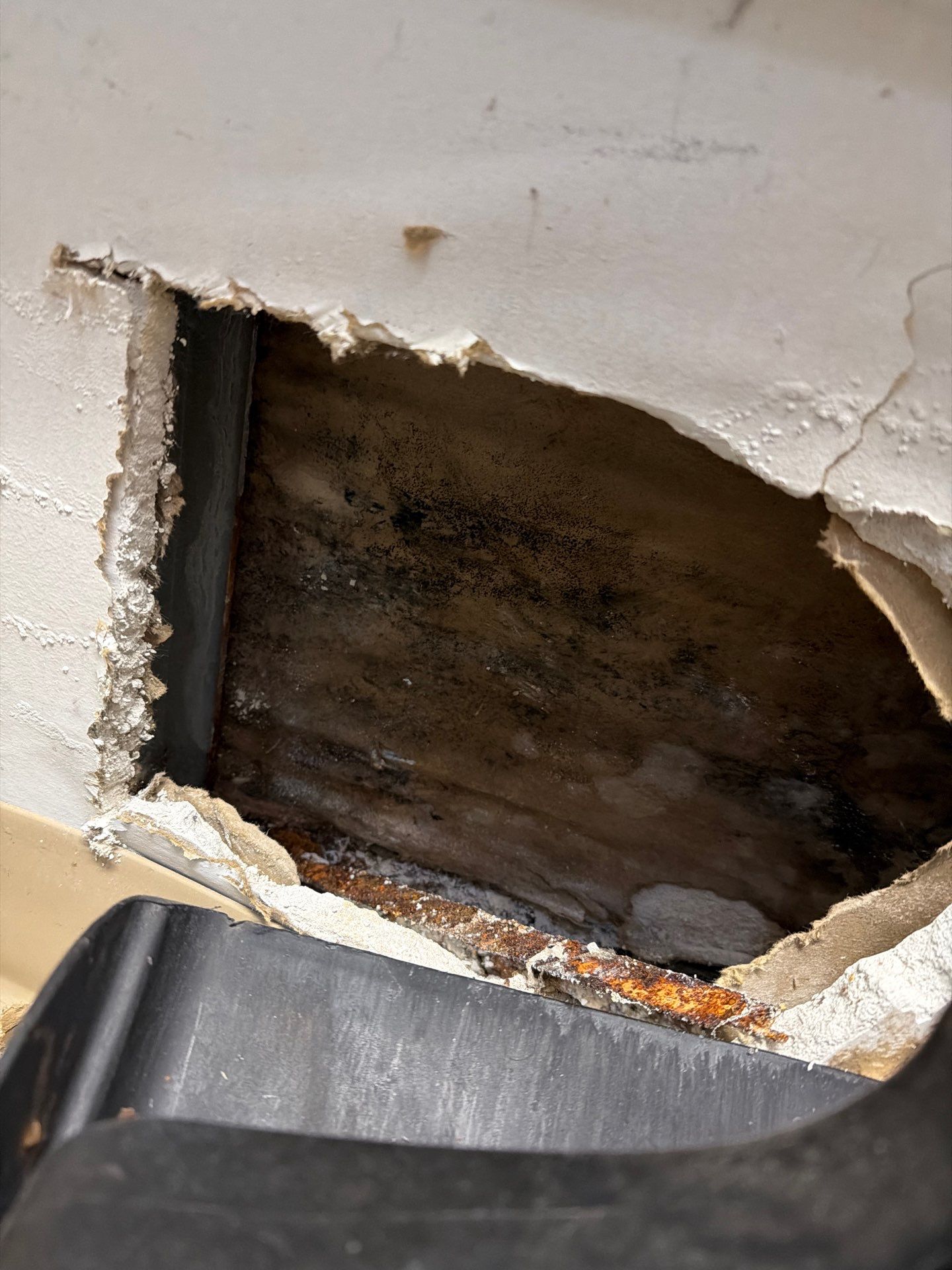
That slow rate is what makes these leaks so destructive. Fast leaks alert you. Slow leaks rot. Water under a fridge sits on the subfloor in darkness with almost no airflow, which is the textbook environment for mold colonization within 48 to 72 hours of saturation. By the time the smell reaches you, the wood fibers are already breaking down. We have pulled refrigerators in Seelyville homes where the subfloor crumbled in our hands like wet cardboard.
The refrigerator itself is part of the problem. Modern units sit tight against the wall and run almost silently, so there is no reason to pull one out unless something obviously fails. The condenser fan also pushes warm air across the back of the cabinet, which can evaporate the top surface of a small leak fast enough that you never see a visible puddle. Meanwhile, the water keeps wicking downward into the subfloor through capillary action. We have inspected leaks where the floor in front of the fridge looked completely dry while a moisture meter read 40 percent saturation just two feet back. That disconnect between what you see and what is actually happening is the single biggest reason these claims become expensive.
Hidden Damage Stages: A Side-by-Side Comparison
The table below maps what we typically find at each stage of a refrigerator line leak. Use it as a diagnostic tool. If your symptoms match Stage 2 or beyond, you are past the DIY window and into professional mitigation territory. For deeper context on detection techniques, our guide to hidden leak detection behind walls covers the moisture meter and thermal imaging steps we use on every inspection.
| Stage | Leak Duration | Visible Signs | Hidden Damage | IICRC Category | Typical Repair Range |
|---|---|---|---|---|---|
| 1. Fresh | 0 to 7 days | Small puddle behind fridge, slightly damp toe kick | Surface moisture on subfloor, minor cabinet kick absorption | Category 1 (clean) | $500 to $1,500 |
| 2. Spreading | 1 to 4 weeks | Warped flooring near fridge, faint musty odor | Saturated subfloor, wet insulation behind cabinet, swelling laminate core | Category 1 or 2 | $1,800 to $4,500 |
| 3. Established | 1 to 3 months | Buckled floor, dark staining at baseboard, visible mold at cabinet base | Subfloor delamination, joist surface mold, drywall wicking 6 to 12 inches up | Category 2 | $4,500 to $9,000 |
| 4. Advanced | 3+ months | Soft floor, sagging cabinet, mold smell throughout kitchen | Joist rot, cabinet box failure, mold in wall cavity, possible ceiling damage below | Category 2 or 3 | $9,000 to $22,000+ |
Reading the Table Honestly
Most homeowners in Seelyville call us at Stage 2 or 3. They notice the warped floor first, then the smell. The jump from Stage 2 to Stage 3 is the most expensive transition in this entire timeline, because that is where the damage moves from drying to demolition. At Stage 2, we can often save the subfloor with targeted extraction, injection drying mats, and 3 to 5 days of dehumidification. At Stage 3, the subfloor has lost structural integrity and must be cut out and replaced, which means removing the lower cabinets, the flooring, and sometimes a section of drywall.
The IICRC category matters for insurance. Clean water from a supply line starts as Category 1, but it degrades to Category 2 within 48 to 72 hours as it picks up contaminants from flooring adhesives, cabinet particleboard, and any organic debris under the appliance. After about a week, especially in a warm Seelyville kitchen, you should assume Category 2 protocols apply. That means antimicrobial treatment, controlled demolition of porous materials, and documented drying logs for your adjuster. If the leak reached a crawl space below, our notes on subfloor water damage detection and repair cost walk through the structural assessment we perform from underneath.
There is also a hidden cost the table does not capture: cabinet replacement. Most kitchen cabinets sit on a particleboard base that absorbs water like a sponge and never recovers its strength. Once a Stage 3 leak migrates under the run of base cabinets next to the refrigerator, the boxes themselves often need to come out even if the doors and face frames look fine. Matching a 10 or 15 year old finish on the surviving cabinets is rarely possible, which pushes some homeowners toward a full kitchen remodel they did not budget for. We have seen what started as a $1,200 mitigation job turn into a $35,000 renovation simply because the homeowner waited three extra weeks to call.
What the Numbers Mean for Your Insurance Claim
Homeowners policies in Indiana generally cover sudden and accidental discharge from a plumbing appliance, which includes a refrigerator supply line that fails without warning. They typically do not cover gradual leaks that the homeowner should have noticed. This is where documentation becomes everything. When Seelyville Water Restoration arrives, we photograph the failure point, log moisture readings across the affected zone, and produce a Xactimate-compatible scope. That paperwork is often the difference between a covered claim and a denial citing long-term seepage. If you want a baseline before filing, schedule a free water damage inspection and we will give you a written assessment whether you hire us or not.
One last note on prevention. Replacing the plastic supply line with a braided stainless steel version costs under fifty dollars and takes most homeowners about twenty minutes. Doing that every time you buy a new refrigerator, and pulling the unit out once a year to check the fitting, is the cheapest insurance you can buy against everything described above.