Commercial Sewage Cleanup in Seelyville, IN
Category 3 sewage cleanup in Seelyville, IN, with containment, antimicrobial treatment and drying verified against readings.
Seelyville Water Restoration handles Commercial Sewage Cleanup for Seelyville, IN homeowners: emergency dispatch around the clock, IICRC certified technicians, and insurance coordination on approved claims. Call (765) 517-7678.
- Service: Commercial Sewage Cleanup for Seelyville homeowners
- Service area: Seelyville, IN and surrounding areas
- Response time: 24/7 answering with priority emergency dispatch across Seelyville
- Licensed and insured (License #RC21100059)
- Serving Seelyville, IN since 2018
Commercial Sewage Cleanup for Seelyville Businesses
What makes a sewage loss expensive is porous material. Carpet, pad, drywall, insulation, ceiling tile, and particleboard casework all hold contamination that can't be cleaned out of them, so they get removed and replaced. Seelyville Water Restoration scopes commercial sewage jobs in Seelyville by what the meters and the material show, which keeps removal to the areas that need it and keeps the rebuild from growing past the loss.
Seelyville Water Restoration writes commercial sewage scopes line by line, with the removal height, the square footage, the antimicrobial and the disposal list each shown on its own. Ask any other vendor bidding your Seelyville job for the readings behind its removal lines, and you can compare the bids apples to apples. Every line on a scope from Seelyville Water Restoration points to a photo or a reading.
Hard surface cleaning carries most of the work in a commercial kitchen or a restroom block. Seelyville Water Restoration crews clean sealed concrete, quarry tile, grout lines, floor sinks, trench drain channels, and stainless bases by hand and with pressure where the finish allows it, because a flood coat of disinfectant across a greasy floor does very little. Drains and traps get cleaned out as part of the same pass.
Carriers ask for documentation in different formats. Some want a specific estimating platform, some want photographs organized by room, and some send a reviewer out. Seelyville Water Restoration adapts the file to what your carrier asks for, and the team keeps you copied. Your carrier decides the claim, and the crew's part is a complete, accurate record of the work.
Call Seelyville Water Restoration before you let staff near a sewage backup. Sewage carries pathogens, and a crew dispatches to Seelyville properties with the PPE and HEPA filtration it takes to handle it safely. The inspection comes first, and your people stay out of the zone while the crew documents the work.
Signs You Need Commercial Sewage Cleanup
If you notice any of these in your Seelyville building, schedule a free inspection before the issue worsens.
Standing water collecting at the base of a walk in cooler or under its condensate line
Trench drain channels running full and spilling across a kitchen floor during service
Sewer odor greeting tenants in a ground floor suite after a weekend closure
A ceiling tile stained and sagging directly below an upper floor restroom
Cove base peeling away from a restroom wall near the floor drain
Water on a slab along the wall where the building's sewer line runs out to the street
Dark staining or a residue ring spreading outward from a floor drain grate
A cleanout cap pushed loose, or water pooling around a cleanout in a mechanical room
Prep sink backing up each time the dish machine drains
Water seeping through a slab joint in a basement corner with a sewer smell
How Seelyville Water Restoration Handles Commercial Sewage Cleanup
We follow these steps in order on every Seelyville job.
Dispatch and Assessment
A crew dispatches to the property within 2 hours. The lead walks the affected area with building staff, identifies the source and photographs the condition before anything gets touched or moved.
Containment and Access Control
Crews build 6 mil poly barriers with zipper entries around the affected area, seal the HVAC openings serving it, and put the zone under negative pressure with HEPA air scrubbers. Entry is limited to crew in PPE for the rest of the job.
Sewage Extraction
Pumps rated for solids remove standing waste before any drying equipment goes in. Hard floors get scraped and squeegeed. Saturated carpet and pad come up in bagged loads carried out through a route that avoids occupied space.
Documentation Handoff
The finished file goes to the property manager in one package: photographs, moisture logs, antimicrobial product details, disposal records and the clearance readings. A copy stays with the building owner for the permanent record.
Repeat Prevention Review
After the space is released, the lead reviews the plumbing path with your maintenance staff and notes cleanout access and the interceptor service schedule. Those notes, with the location of any backwater valve, go to your plumber to review for line maintenance.
Commercial Sewage Cleanup in Seelyville
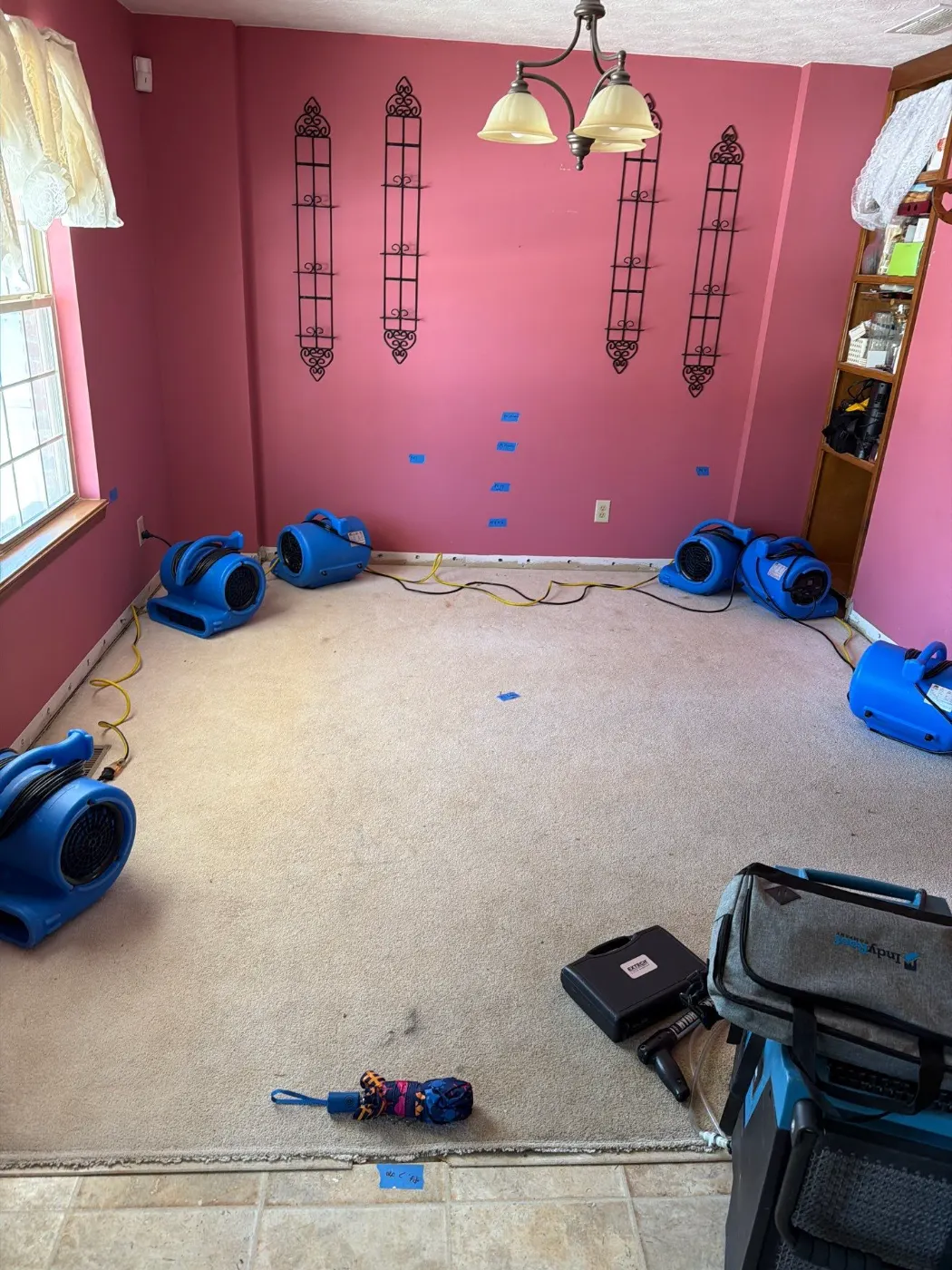
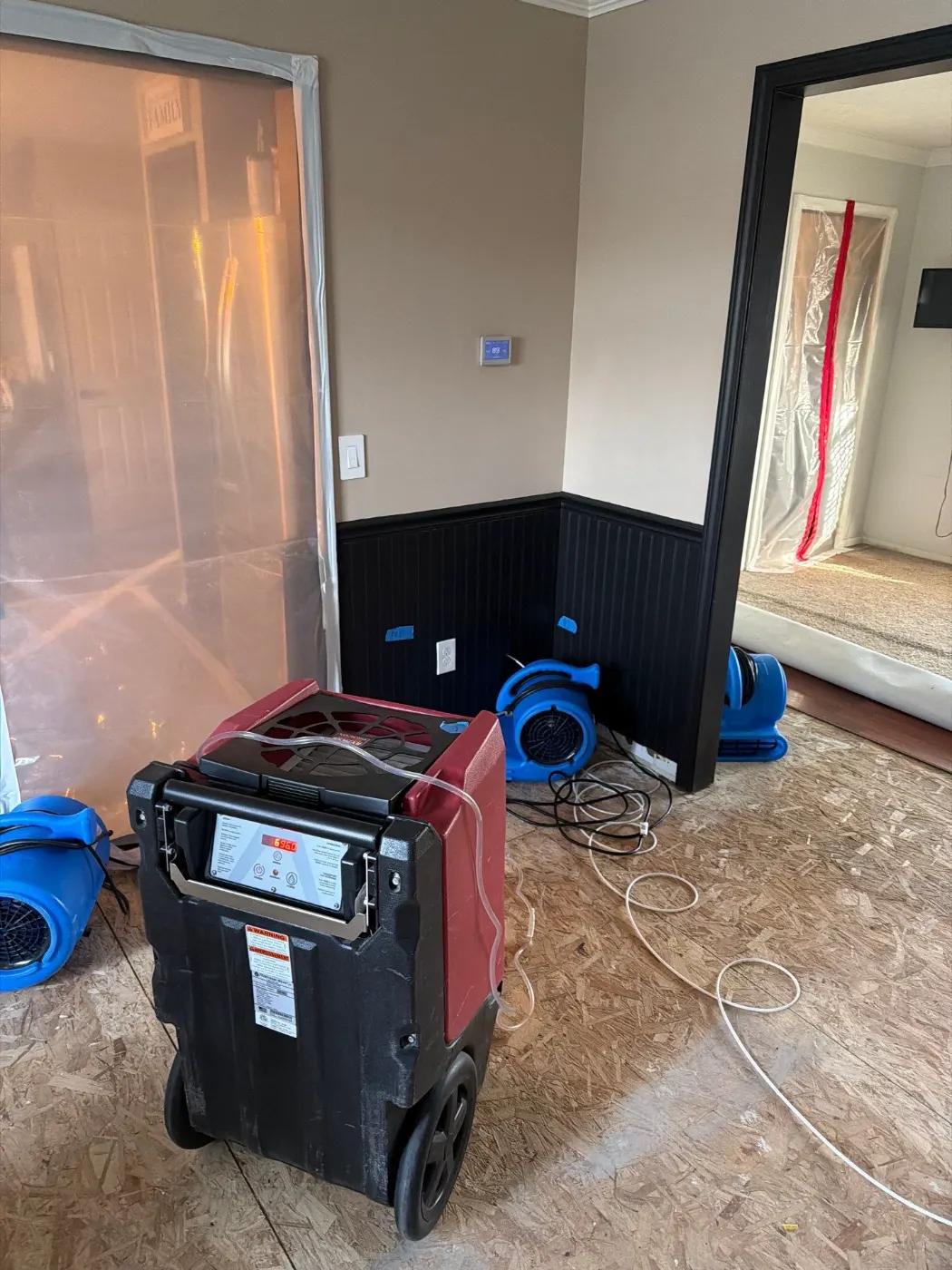
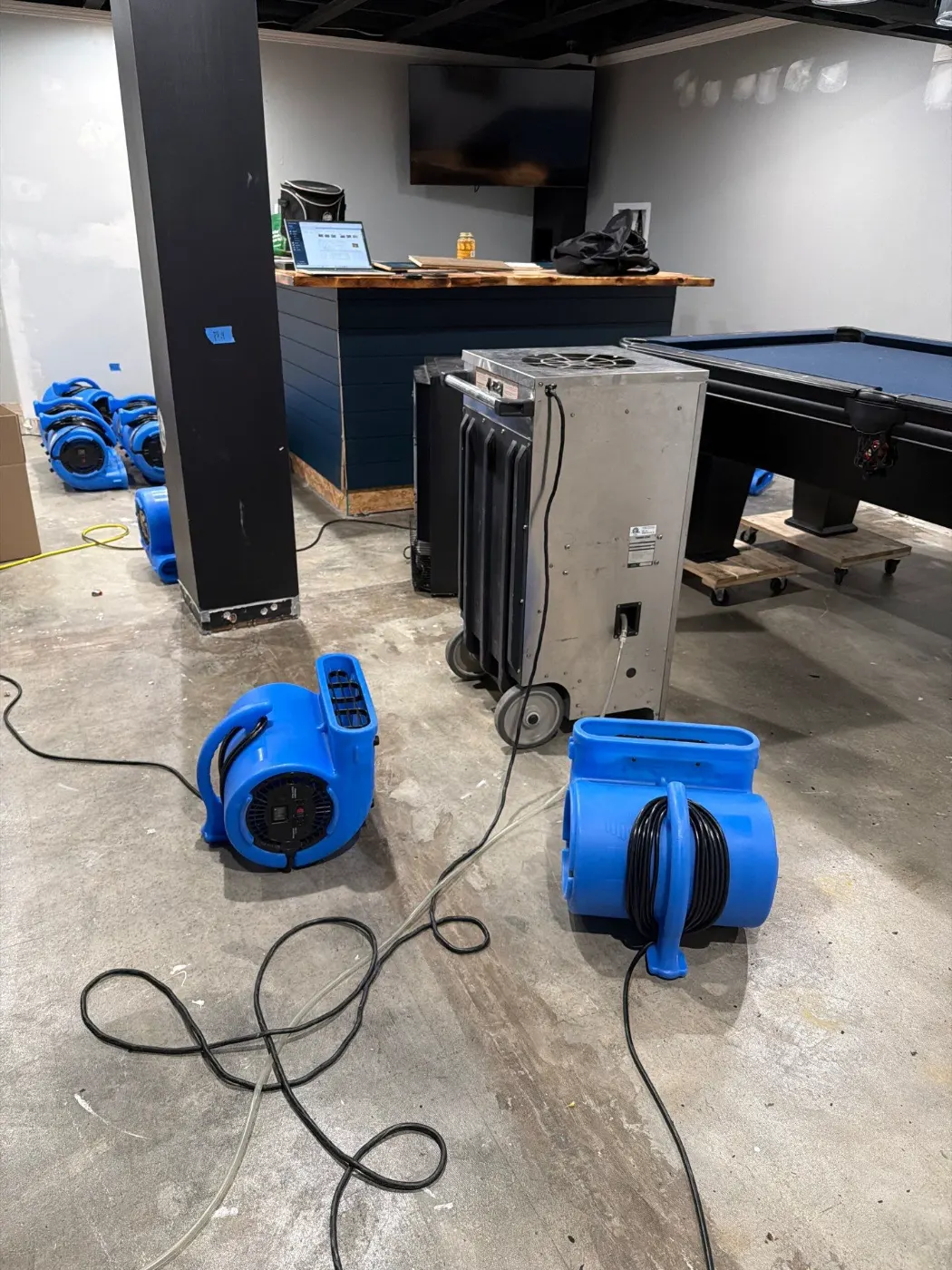
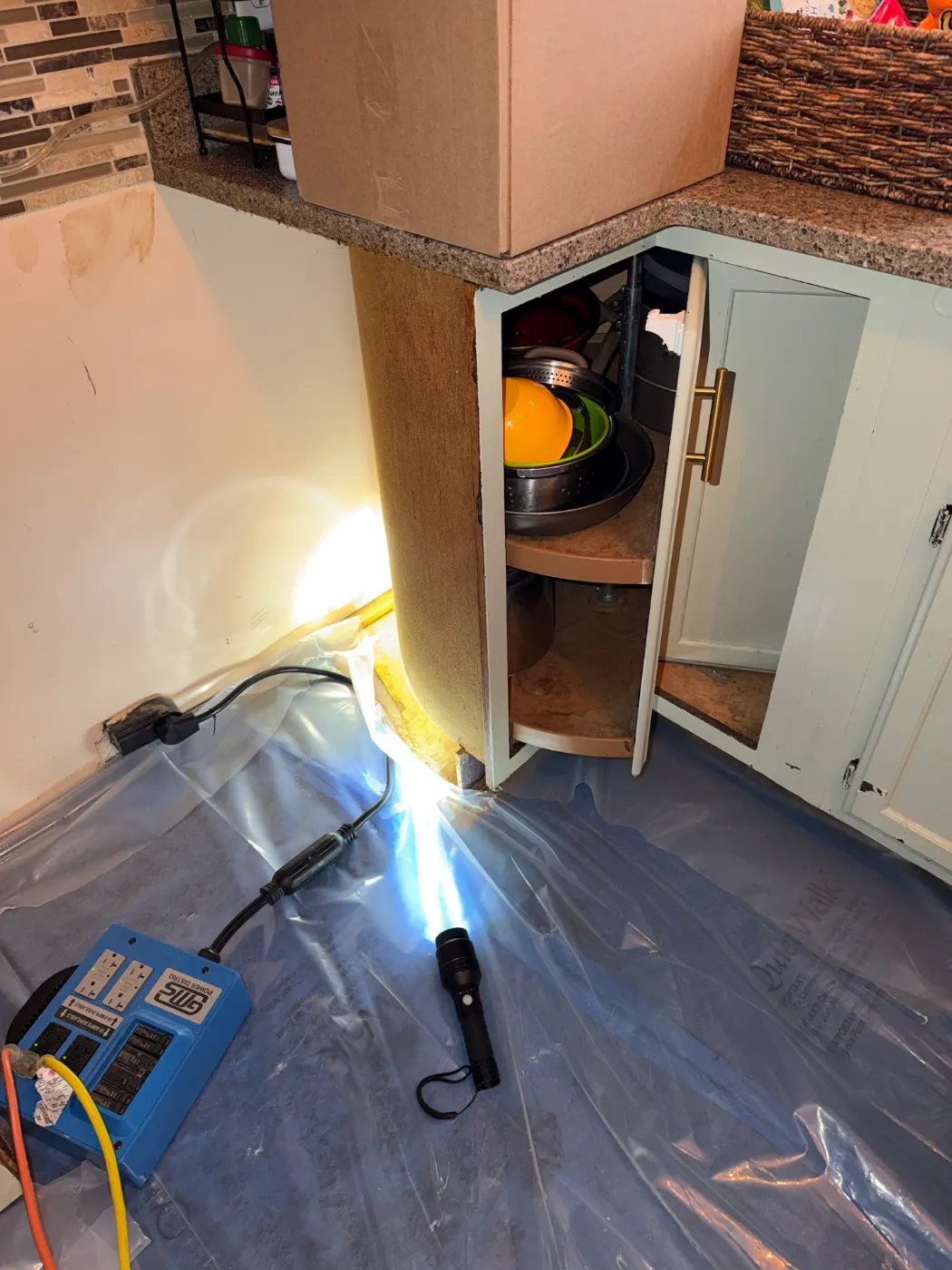
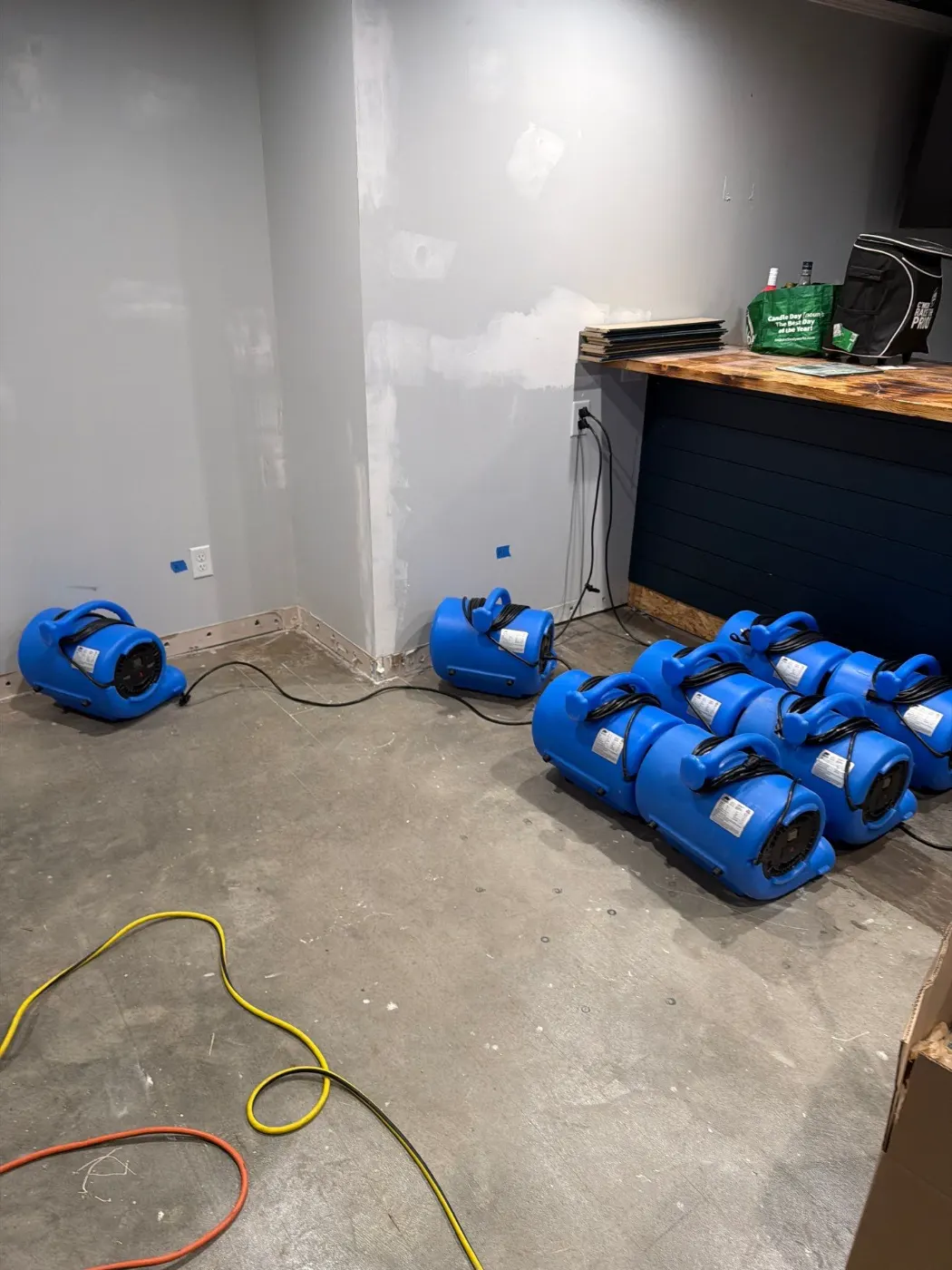
Photographs from real commercial sewage cleanup jobs completed by our crew in Seelyville and surrounding areas.
Commercial Sewage Cleanup FAQ
Questions Seelyville property managers ask us about commercial sewage cleanup.
Guidance and Standards for Commercial Sewage Cleanup
- The ANSI/IICRC S500 is the published standard for professional water damage restoration. The current edition is the Fifth Edition, 2021. IICRC S500 Standard
Seelyville Neighborhoods We Serve
We take commercial sewage cleanup calls in every part of Seelyville. Pick your neighborhood for local details.
Other Restoration Services in Seelyville
Seelyville Water Restoration handles the full scope of restoration work. Explore our other services below.
Water Damage Restoration in Seelyville
24/7 emergency response. IICRC certified water restoration from extraction to full dry out.
Learn more →Basement Flooding in Seelyville
Basement water emergencies handled fast. Extraction, drying, mold prevention.
Learn more →Sewage Cleanup in Seelyville
Category 3 biohazard cleanup. Full containment, decontamination, structural restoration.
Learn more →Request Commercial Sewage Cleanup
Reach Us Directly
Our team is available 24/7 for emergencies and ready to schedule inspections during business hours.
Need Immediate Help?
For active water or mold emergencies, call us directly. We are available 24/7.