Storm Damage in Seelyville, IN
Wind driven rain at Seelyville windows and doors, traced through the wall and dried to match your dry rooms.
Seelyville Water Restoration is the Seelyville call for Storm Damage: emergency crews around the clock, moisture readings instead of guesswork, and insurance files built properly. Call (765) 517-7678.
- Service: Storm Damage for Seelyville homeowners
- Service area: Seelyville, IN and surrounding areas
- Response time: 24/7 live dispatch; emergency crews prioritized for Seelyville
- Licensed and insured (License #RC21100059)
- Serving Seelyville, IN since 2018
Storm Damage Cleanup in Seelyville
After a storm in Seelyville, we'll cover the opening first and then dry out what got wet.
Storms Here
Severe thunderstorms come through in spring and summer. If your insurance company asks for a storm date, NWS Indianapolis keeps a list of past events.
Where Storm Water Ends Up
Homes near the Wabash River can see rising water after heavy rain. With full basements common here, a big storm can bring water in from below as well as through the roof. That makes it a basement flooding job too.
After a storm we can be anywhere in Seelyville, from Lost Creek Township Residential Area to the roads around Seelyville Waterworks and Lost Creek Elementary School. We also handle storm damage in Staunton, Riley, Knightsville and Brazil.
Expert Storm Damage for Seelyville Homeowners
The power went out during the storm and the sump pump stopped with it, so the water in your Seelyville basement kept rising with nothing to move it. Standing water near outlets or the panel is the first hazard to respect. The next is how quickly the carpet and the bottom of the drywall soak it up. Seelyville Water Restoration pumps the basement down and dries what held water.
Seelyville Water Restoration handles the ceiling and the finishes once the readings show the cavity is dry. Insulation goes back to the recorded depth, the ceiling board gets hung, taped and textured, and paint and trim follow. You approve the rebuild scope in writing first, and the drying readings stay in your file for your Seelyville home.
Drying follows a curve, with the first day pulling out the most water and the readings dropping fast, then the last stretch slowing down as dense materials like framing and plaster release what they absorbed. Seelyville Water Restoration expects that slowdown on storm jobs in Seelyville and keeps the equipment running through it until the numbers match the dry reference.
Start a list of damaged belongings while the rooms are still wet. Photograph each item where it sits, then write down what the item is and roughly when you bought it. Seelyville Water Restoration photographs contents that shift during the job in your Seelyville home, and the photo set you keep gives you a second record to build the list from.
If a ceiling in your house is stained or sagging after a storm, call Seelyville Water Restoration now. A crew dispatches to Seelyville within 2 hours. Extraction, insulation removal, structural drying and the rebuild can all run through Seelyville Water Restoration, with photos and readings tying each step together.
Signs You Need Storm Damage Restoration
If you notice any of these in your Seelyville home, schedule a free inspection before the issue worsens.
Attic insulation that looks matted, flattened or darker in patches
Wallpaper seams lifting or paint peeling at the baseboard after a storm
Moisture beading on outlet covers or switch plates along a wall that water ran down
Mud film on a basement floor once the water has drained away
Mold spotting on the back wall of an upstairs closet or behind furniture on an outside wall
A musty smell that comes back in the same room after every rain and fades in between
A pin moisture meter reading far above the same wall in a dry room
Daylight visible through the roof sheathing when you look up from inside the attic
Silt left on the garage floor or mudroom tile after runoff pushed in
Flooring cupping, lifting, or separating at the seams along an exterior wall
How Seelyville Water Restoration Handles Storm Damage
We follow these steps in order on every Seelyville job.
Storm Call Intake
The first call covers where you see water, whether the power is on, how long it's been coming in and what's already been moved. Those answers decide what gear goes out and what to do before the crew gets there.
Contents Protection
Furniture legs get blocked off wet flooring and small items move out of the water's reach, with photos taken of anything that shifts. Rugs and boxes in a flooded basement come up off the floor before extraction starts.
Drying Equipment Setup
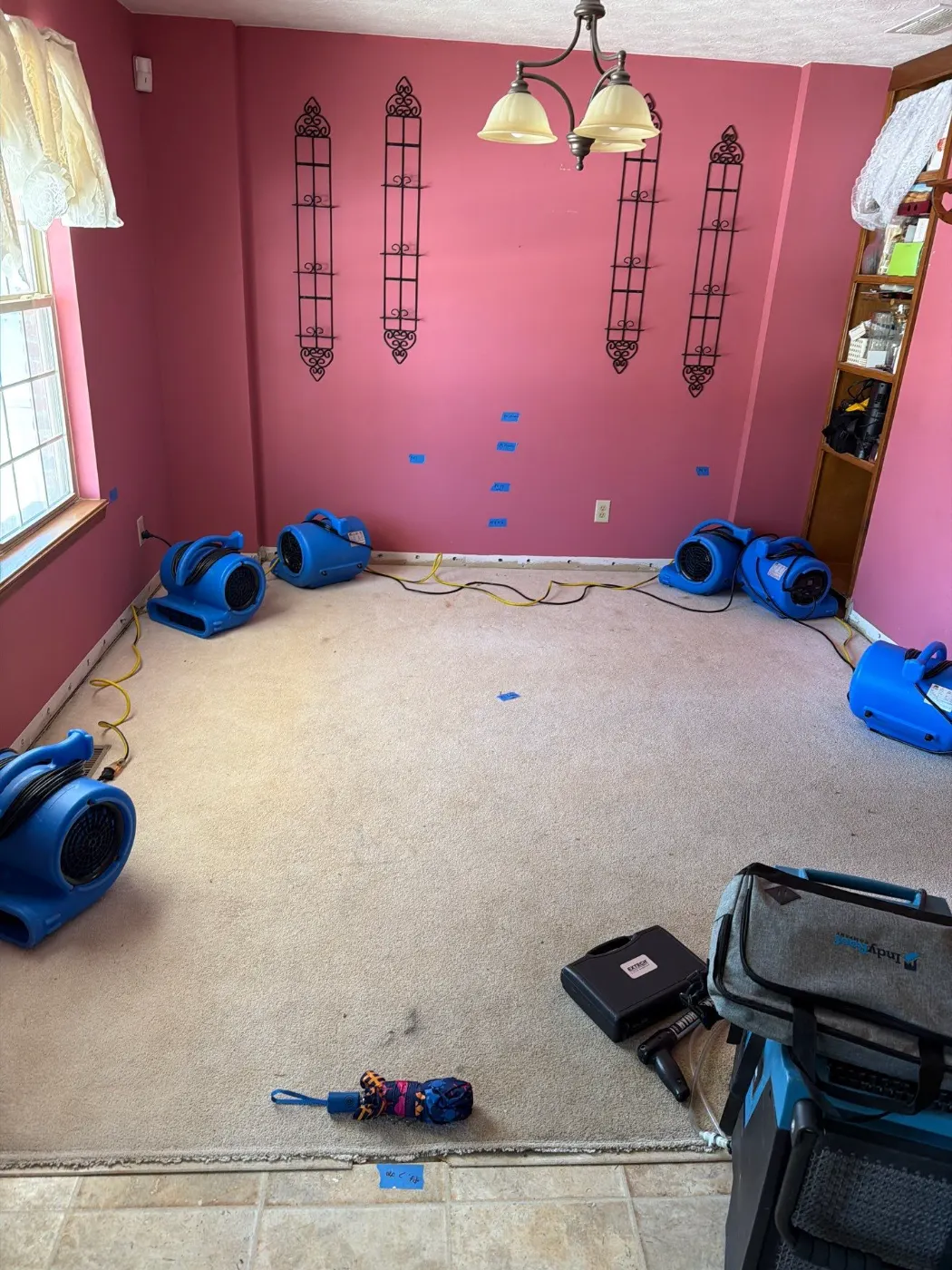
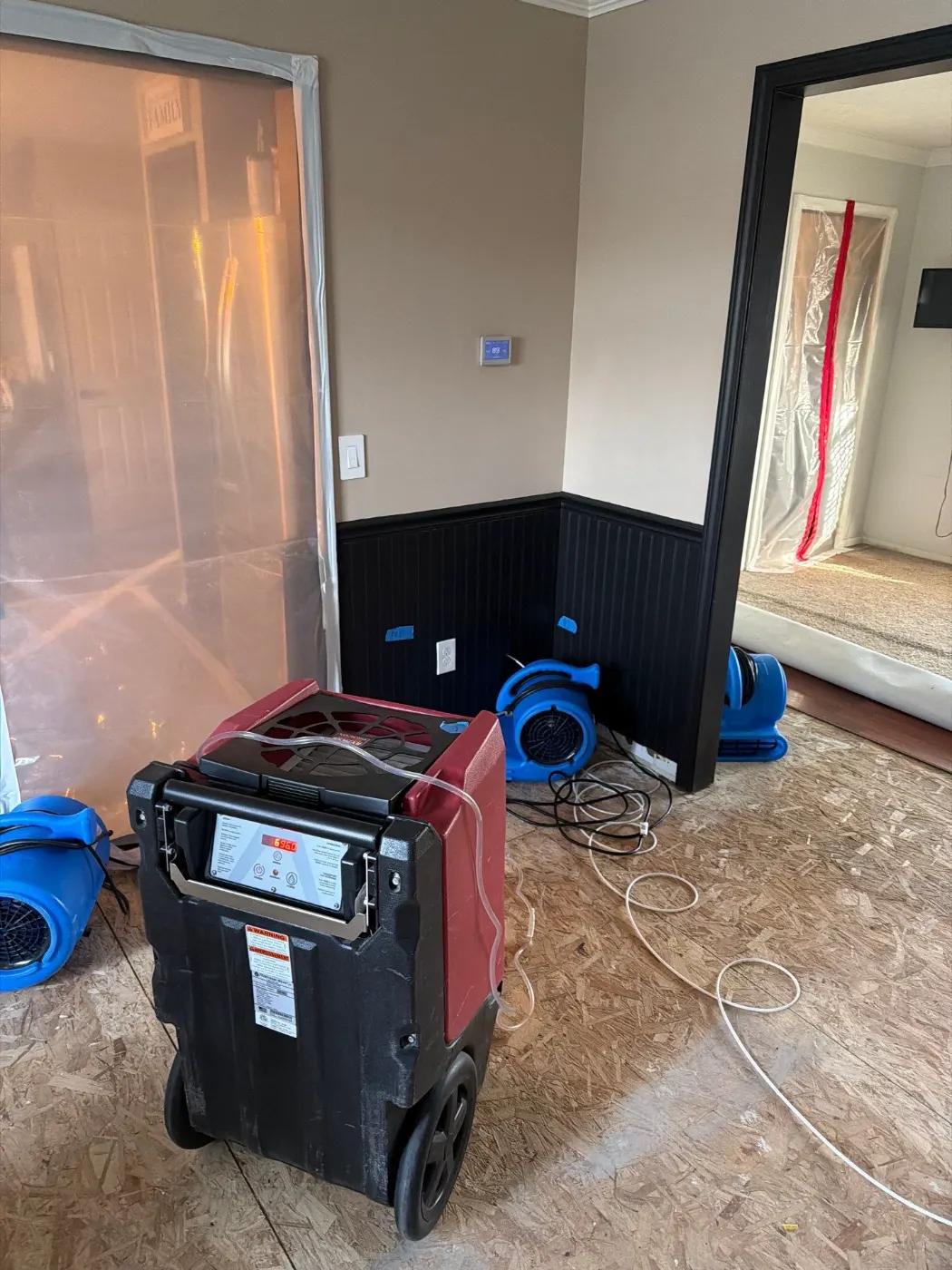
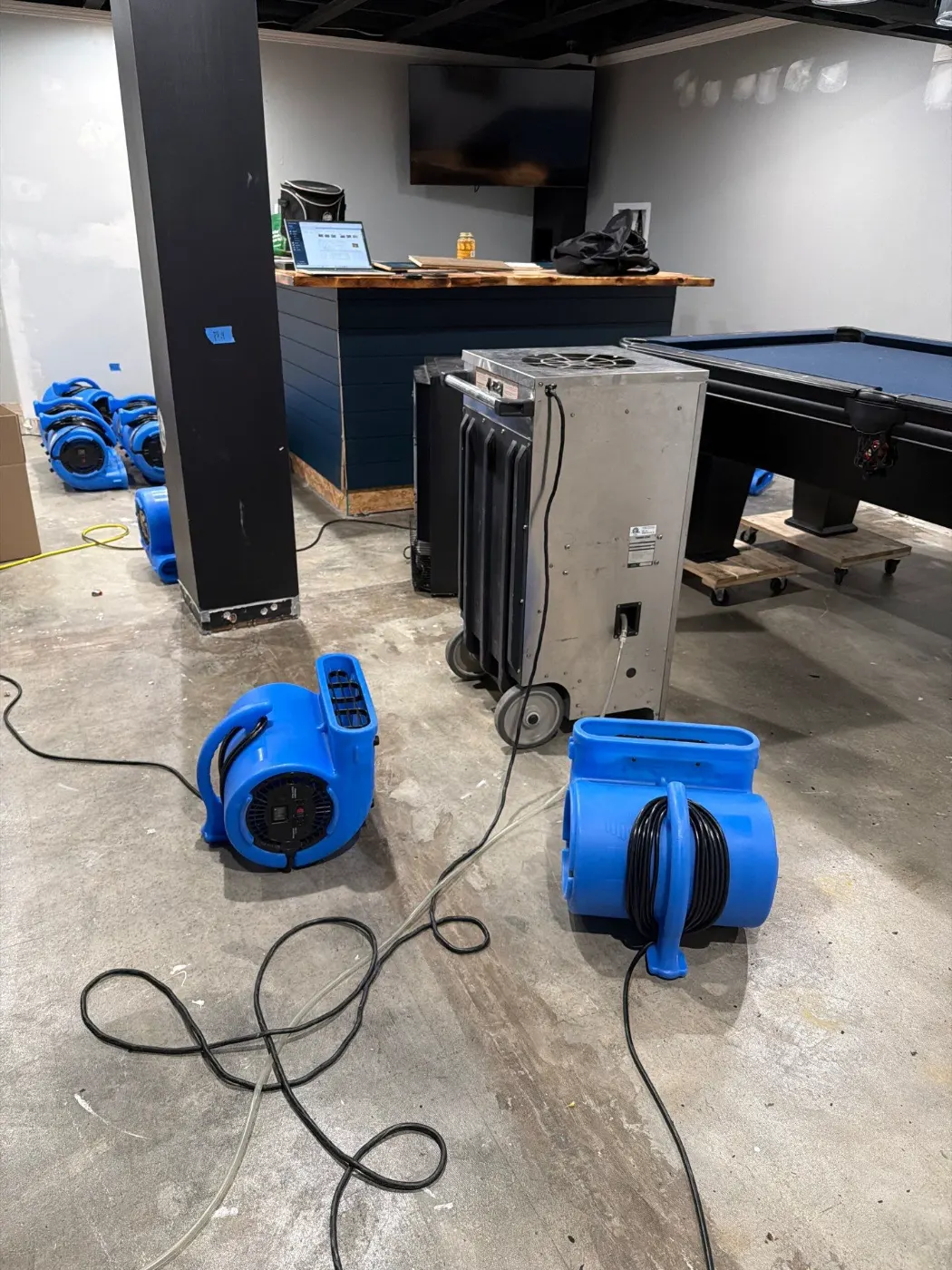
Air movers go where the mapping shows wet surfaces, and dehumidifiers get sized to the volume of the space being dried. Closed doors and poly sheeting seal off the drying area so the equipment works on the wet rooms only.
Attic and Cavity Drying
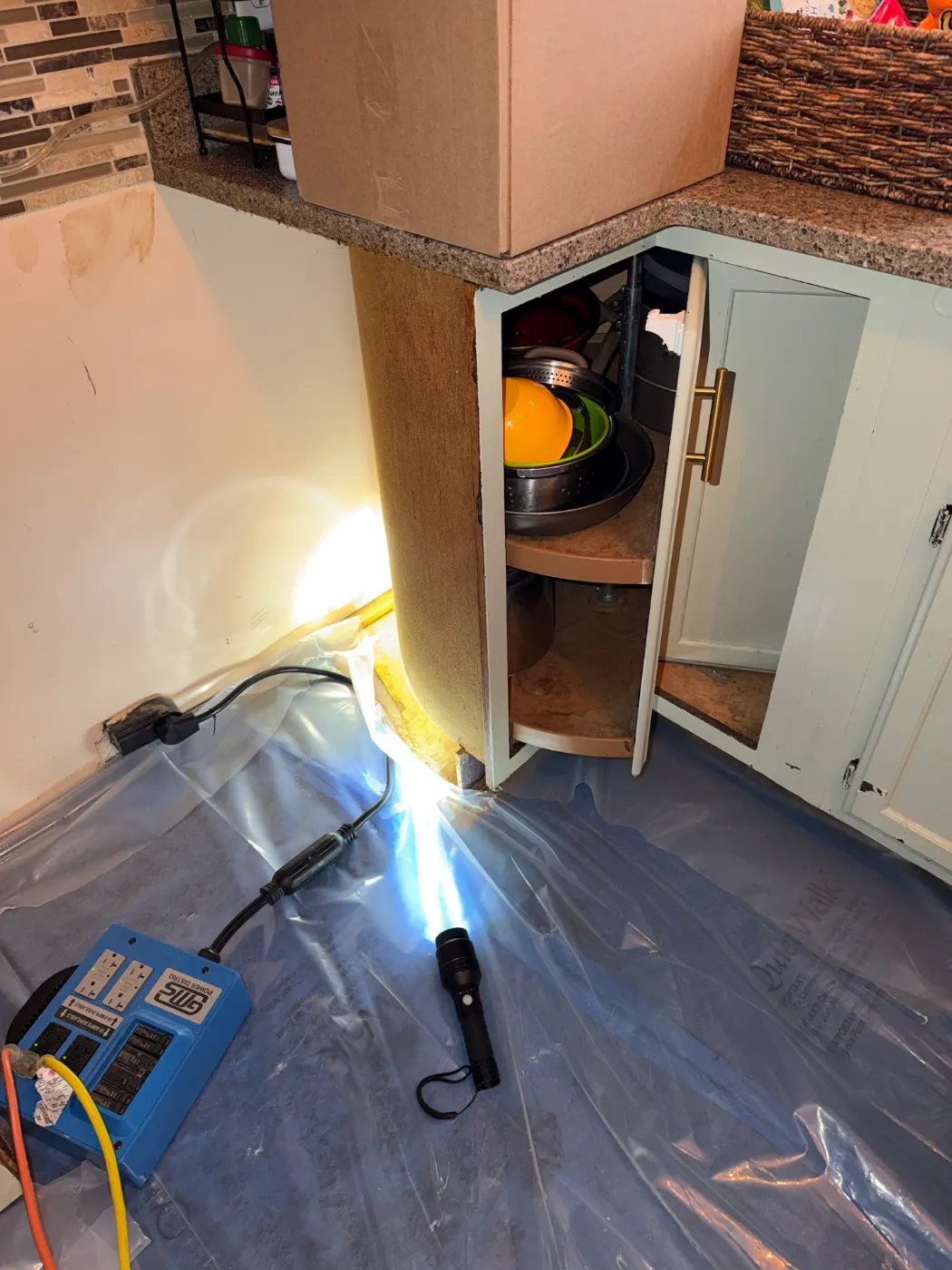
Air movers aim at wet surfaces, dehumidification is sized to the containment volume, and negative air cavity drying runs through small ports where a ceiling or wall doesn't have to come down to dry. Humidity gets tracked inside and outside the drying area.
Reconstruction and Finish Work
Insulation goes back to the recorded depth, ceiling board gets hung, taped and finished, texture is matched to the existing surface, then paint, trim, flooring and anything else that came out. The rebuild follows the measurements taken during the drying.
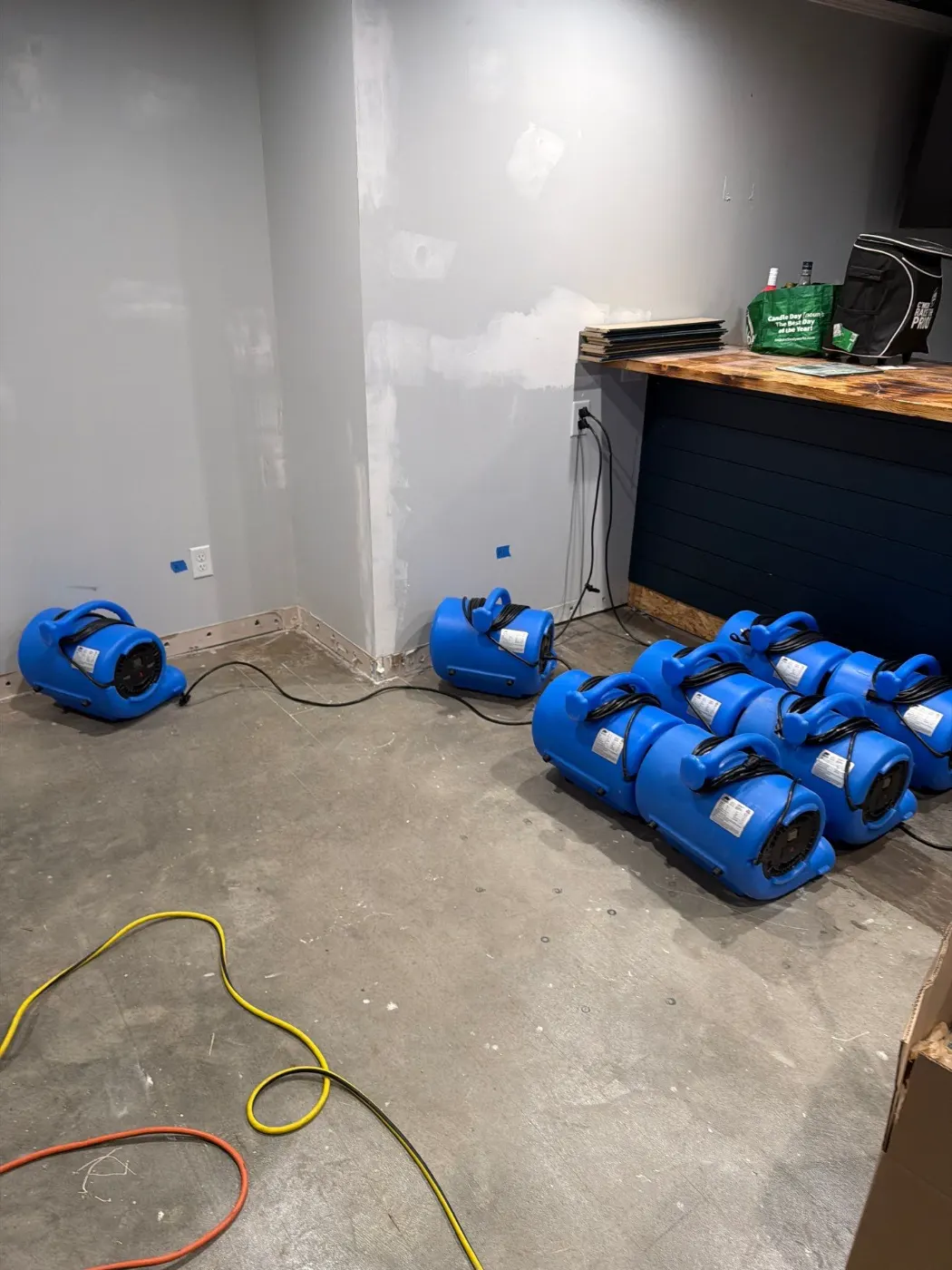
Storm Damage in Seelyville
Photographs from real storm damage jobs completed by our crew in Seelyville and surrounding areas.
Storm Damage FAQ
Questions Seelyville homeowners ask us about storm damage restoration.
Guidance and Standards for Storm Damage
- The National Weather Service office in Indianapolis posts summaries of recent central Indiana storm and flood events. NWS Indianapolis Event Summaries
- The Indiana Department of Insurance advises against permanent repairs before your insurance company inspects the damage. Check your own policy for what it covers. Indiana Department of Insurance: Insurance Claim Tips
Seelyville Neighborhoods We Serve
We take storm damage calls in every part of Seelyville. Pick your neighborhood for local details.
Other Restoration Services in Seelyville
Seelyville Water Restoration handles the full scope of restoration work. Explore our other services below.
Water Damage Restoration in Seelyville
24/7 emergency response. IICRC certified water restoration from extraction to full dry out.
Learn more →Basement Flooding in Seelyville
Basement water emergencies handled fast. Extraction, drying, mold prevention.
Learn more →Sewage Cleanup in Seelyville
Category 3 biohazard cleanup. Full containment, decontamination, structural restoration.
Learn more →Request Storm Damage Restoration
Reach Us Directly
Our team is available 24/7 for emergencies and ready to schedule inspections during business hours.
Need Immediate Help?
For active water or mold emergencies, call us directly. We are available 24/7.