Commercial Storm Damage in Seelyville, IN
Roof breach dried in, tenant spaces dried out. Seelyville Water Restoration answers commercial water intrusion in Seelyville around the clock.
Seelyville Water Restoration is the Seelyville call for Commercial Storm Damage: emergency crews around the clock, moisture readings instead of guesswork, and insurance files built properly. Call (765) 517-7678.
- Service: Commercial Storm Damage for Seelyville homeowners
- Service area: Seelyville, IN and surrounding areas
- Response time: Emergency water calls in Seelyville get crews rolling, not callbacks
- Licensed and insured (License #RC21100059)
- Serving Seelyville, IN since 2018
Commercial Storm Damage Cleanup in Seelyville
We'll secure and dry commercial buildings in Seelyville after a storm opens the roof or floods a lower level.
Storms Here
Spring and summer are severe thunderstorm season here. NWS Indianapolis posts summaries of past storms, which helps when your carrier asks for a date.
We respond to storm calls from businesses anywhere in Seelyville, including those around Seelyville Town Hall and Lost Creek Elementary School. We also handle commercial storm damage in Riley, Knightsville, Brazil and Terre Haute.
Commercial Storm Damage for Seelyville Businesses
Spring rain on saturated or frozen ground pushes runoff toward the dock doors, and a few inches of water can cross an entire receiving area. It fills the leveler pits and seeps under the dock office walls while the bottom pallet positions take it up. Seelyville Water Restoration clears the water from your Seelyville dock and dries the slab and the walls it reached.
Water hides in a commercial assembly in a few predictable places, like batt insulation above the grid, metal stud cavities, a fluted deck and the space under a topping slab. Seelyville Water Restoration crews carry the meters to check each one in your Seelyville building and the inspection holes to reach them, and the readings decide what gets opened.
Debris leaves an occupied building along a route agreed with the property manager. Wet insulation and tile are bagged where they come out, and the loads leave through a service door or dock at hours the tenants won't notice. Sheeting covers the floor along the route. Seelyville Water Restoration plans that route for your Seelyville building from the first walk.
Some commercial storm losses get paid out of an operating budget, and the documentation still matters there. Seelyville Water Restoration builds the same file either way on a commercial job in Seelyville, because a capital request to ownership gets reviewed too. Readings, photos and a scope tied to measured area give the property manager something defensible to hand up.
Not sure where the water is coming from? Call Seelyville Water Restoration anyway. The crew can trace it through your Seelyville building with a thermal camera and a meter, and the first readings show how far it has traveled and which rooms need attention.
Signs You Need Commercial Storm Damage Restoration
If you notice any of these in your Seelyville building, schedule a free inspection before the issue worsens.
Open seams, shrinkage at a membrane lap, or a corner of the roof lifting in wind
Vinyl tile or glue down carpet lifting at the seams out in the middle of a floor plate
Water tracking under the seals of overhead dock doors and pooling in the leveler pit
Standing water ponding on the roof more than two days after the rain stopped
Fresh brown rings on ceiling tile directly under an interior roof drain line
The smell of damp cardboard in a stockroom that gets stronger after each heavy rain
Ceiling tiles sagging, stained brown at the center, or crumbling along the grid in one area of a floor
Silt or sediment left as a film on the receiving area floor once the water drains off
Window sills or curtain wall mullions holding water on the inside face after wind driven rain
Roof drain piping dripping at a joint inside a chase or above the ceiling
How Seelyville Water Restoration Handles Commercial Storm Damage
We follow these steps in order on every Seelyville job.
Contents and Inventory Protection
Stock and equipment on wet floors get lifted onto blocking or moved to dry ground, with plastic over anything that has to stay. A photo list records what moved and where, which supports each tenant's own claim.
Water Path Check
The crew traces the water from the roof breach down through the ceiling to the floors below and photographs the path. Water that backed up out of a drain tied into a sanitary line gets handled as sewage, and that call drives the protocol.
Cavity Inspection Openings
Where meters or thermal imaging point to hidden water, the crew opens a small inspection hole or lifts a tile. What the probe finds inside decides how much larger the cut needs to be.
Daily Readings Logged
Each day brings temperature, relative humidity and material moisture readings logged against an unaffected baseline elsewhere in the building. Equipment moves based on what the numbers show. The property manager gets the readings and the photos the same day.
Equipment Out and Space Release
As each area reaches its dry goal, the equipment comes out of it and the space goes back to the tenant. The release date and final readings for every area go in the file.
Commercial Storm Damage in Seelyville
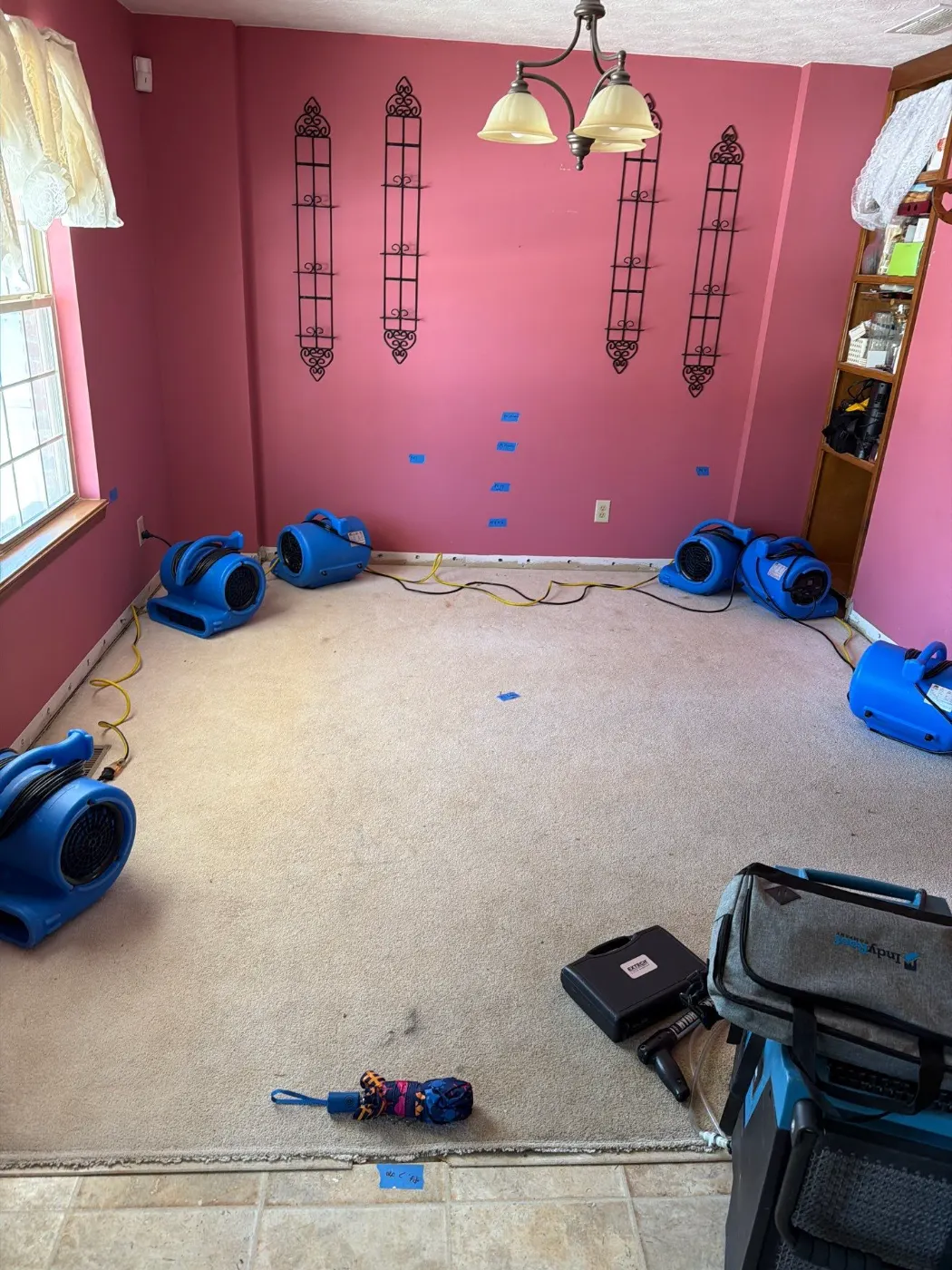
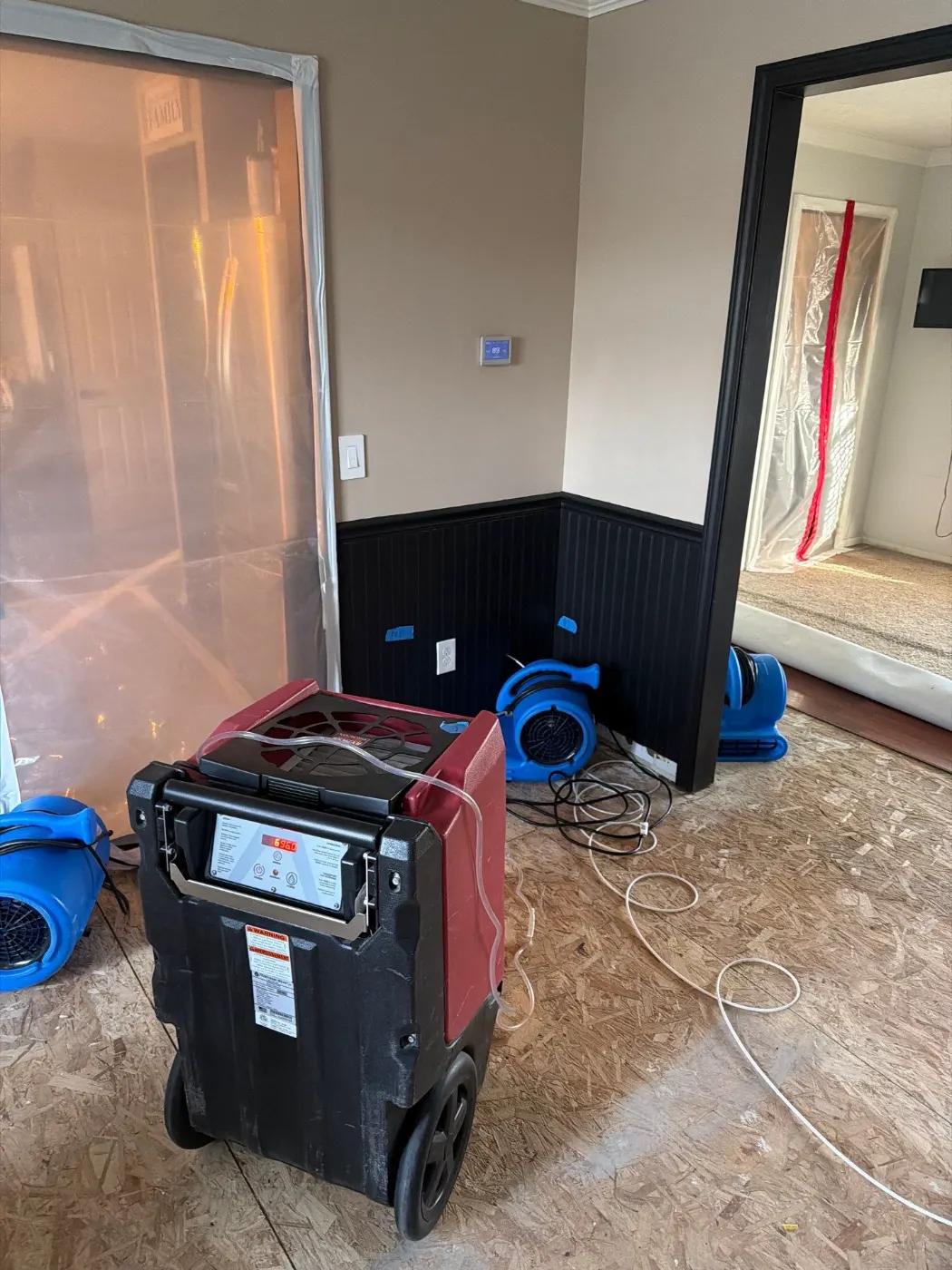
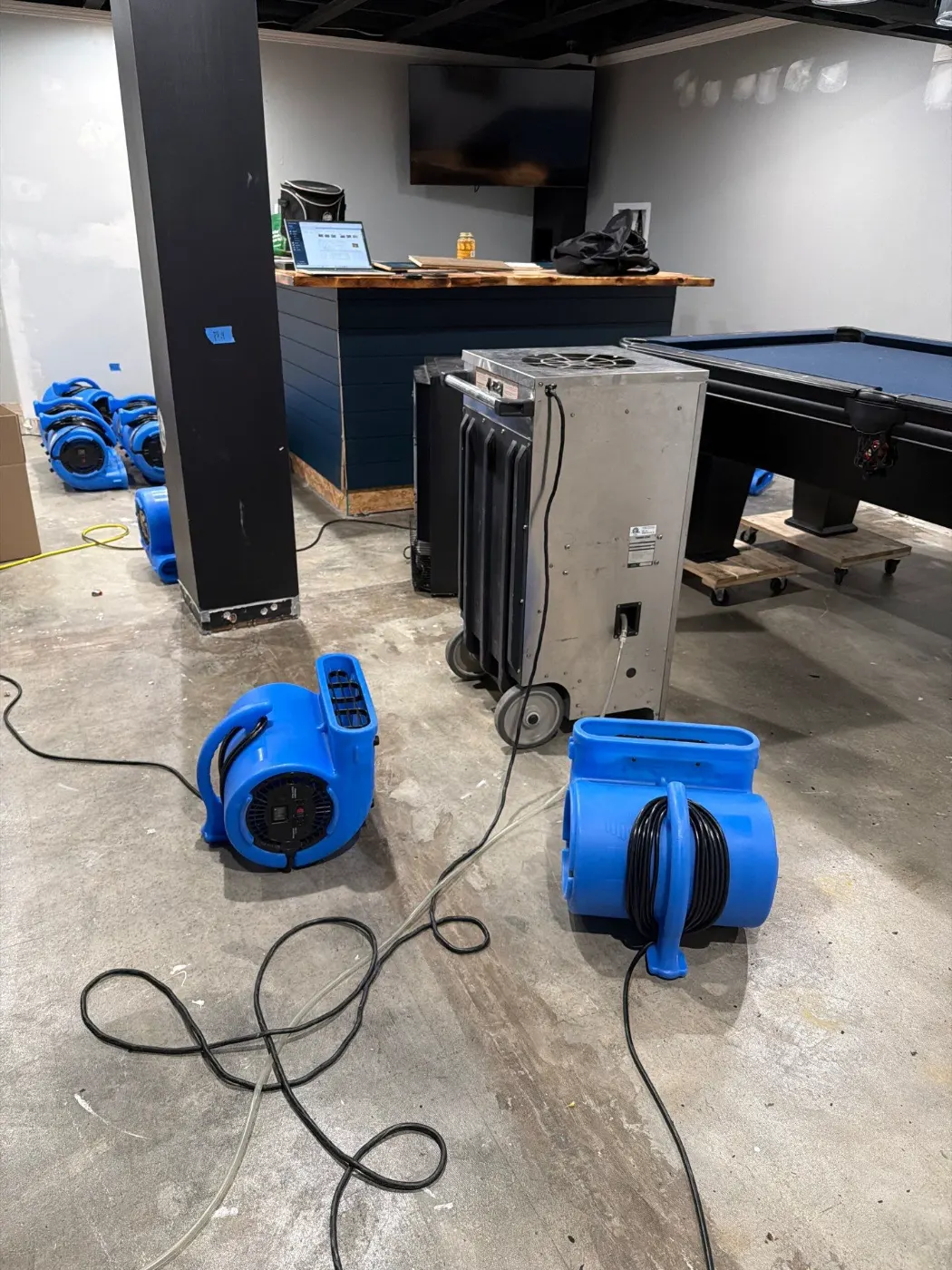
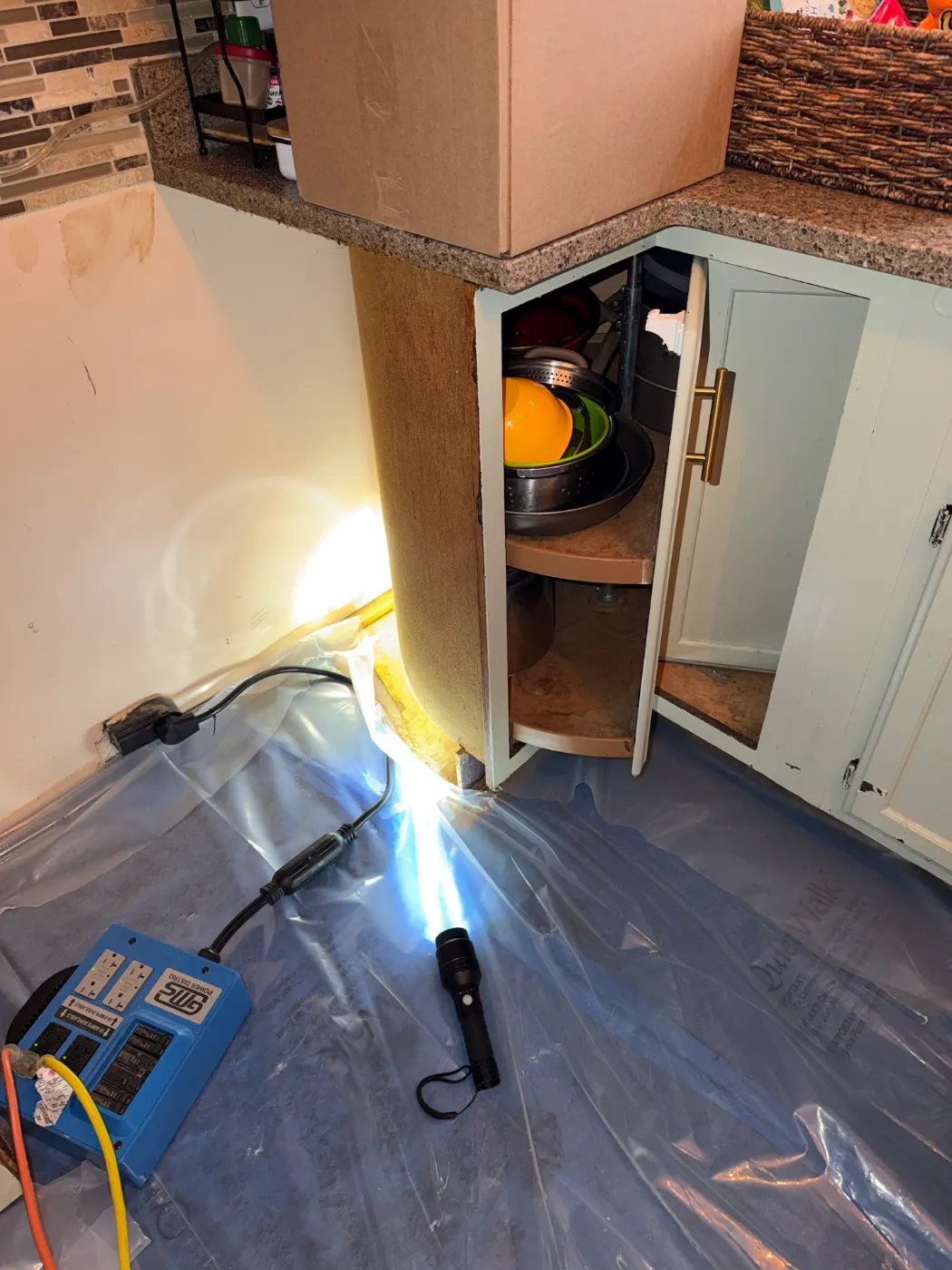
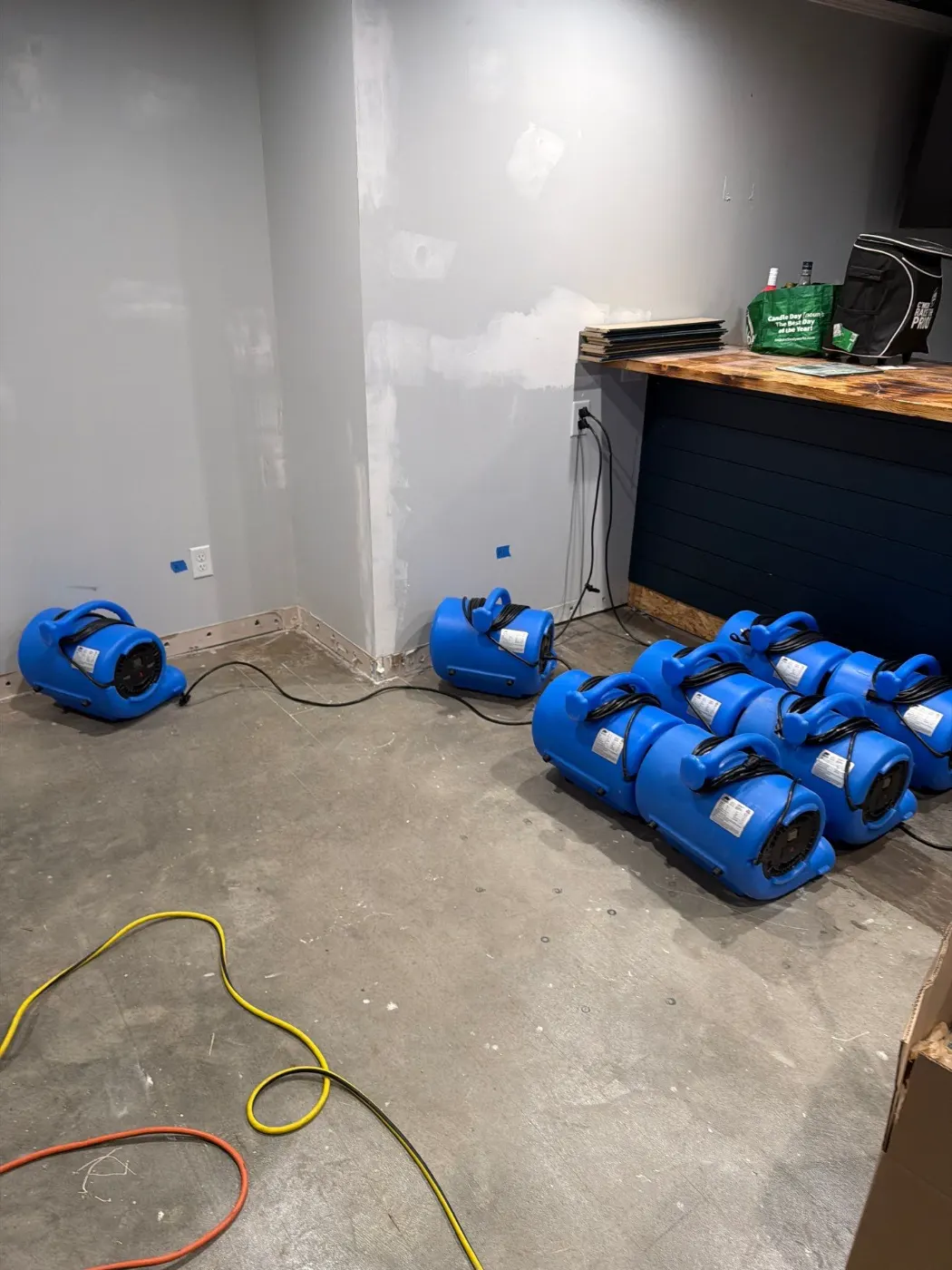
Photographs from real commercial storm damage jobs completed by our crew in Seelyville and surrounding areas.
Commercial Storm Damage FAQ
Questions Seelyville property managers ask us about commercial storm damage restoration.
Guidance and Standards for Commercial Storm Damage
- The National Weather Service office in Indianapolis posts summaries of recent central Indiana storm and flood events. NWS Indianapolis Event Summaries
- The ANSI/IICRC S500 is the published standard for professional water damage restoration. The current edition is the Fifth Edition, 2021. IICRC S500 Standard
Seelyville Neighborhoods We Serve
We take commercial storm damage calls in every part of Seelyville. Pick your neighborhood for local details.
Other Restoration Services in Seelyville
Seelyville Water Restoration handles the full scope of restoration work. Explore our other services below.
Water Damage Restoration in Seelyville
24/7 emergency response. IICRC certified water restoration from extraction to full dry out.
Learn more →Basement Flooding in Seelyville
Basement water emergencies handled fast. Extraction, drying, mold prevention.
Learn more →Sewage Cleanup in Seelyville
Category 3 biohazard cleanup. Full containment, decontamination, structural restoration.
Learn more →Request Commercial Storm Damage Restoration
Reach Us Directly
Our team is available 24/7 for emergencies and ready to schedule inspections during business hours.
Need Immediate Help?
For active water or mold emergencies, call us directly. We are available 24/7.